Airport Road Marking Glass Beads (RI1.9 High Reflective Type)
Product Overview
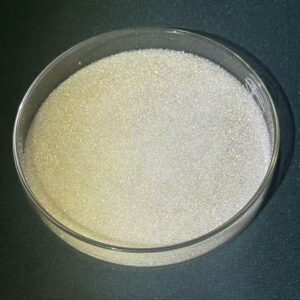
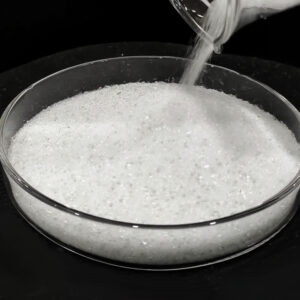
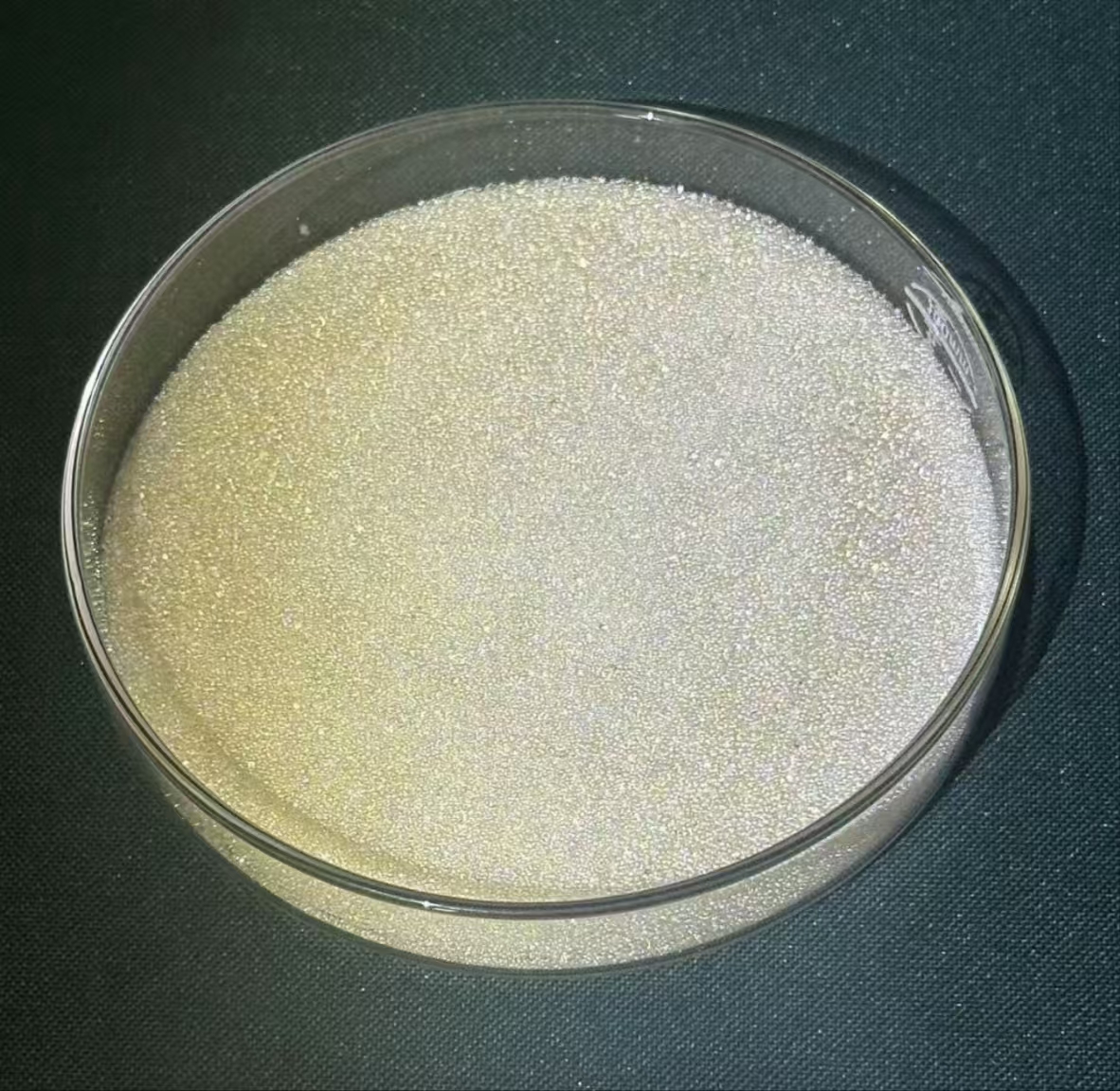
Adopting barium-titanate high-refraction optical glass formula, the refractive index is stably controlled at 1.90~1.93, solving the “wet night blindness” problem of ordinary 1.5 road glass beads. Under rainy, foggy and low-visibility conditions, it maintains ultra-high retroreflective brightness for long-distance pilot identification, greatly improving flight landing and taxi safety.
Two Available Types for Construction
- Intermix (Pre-mixed) Glass Beads
Blended into thermoplastic, MMA two-component or cold spray marking paint in advance; evenly distributed inside the marking layer to provide long-term lasting reflection, used for runway middle lines, edge lines and continuous guidance markings.
- Drop-on (Surface scatter) Glass Beads
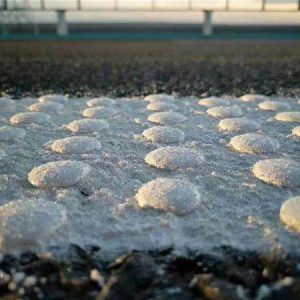
Sprinkled on the fresh surface of hot marking coatings; exposed on the top layer to realize instant ultra-high brightness, matched with intermix beads to form double-layer reflective structure, standard for airport landing zone and runway number markings.
Core Superior Advantages
- Stable ND1.90~1.93 High Refractive Index
Retroreflective luminance ≥1000 mcd/m²·lx, 3~5 times higher than ordinary 1.5 index beads. Even with a water film covered on the pavement, light can penetrate and reflect back to the pilot’s high observation angle, meeting the long-distance identification demand of aircraft cockpits.
- High Sphericity ≥90%, Low Defect Rate
Multi-stage air classification & full optical screening, sphericity over 90%, few bubbles and cracked beads. Uniform spherical shape avoids light scattering, ensures consistent reflection brightness of the whole marking line.
- Excellent Weather & Chemical Resistance
Low heavy metal lead-free formula, resistant to aviation kerosene, deicing fluid, hydraulic oil, UV aging and salt fog corrosion. Not easy to yellow or pulverize under long-term aircraft wheel rolling, extend marking service life by over 50%.
- Custom Silane Coating Optional
Silane surface treatment improves compatibility with marking resin, prevents bead sinking and agglomeration in paint, guarantees uniform suspension during construction.
- Full International Aviation Certifications
Pass FAA TT-B-1325D Type III, EN1423, AASHTO M247, MH/T 6011 test; complete MSDS, third-party inspection reports provided for airport bidding projects.
Standard Technical Specification Table
| Item | Standard Parameter |
|---|---|
| Chemical Composition | TiO₂-BaO-SiO₂ optical lead-free glass |
| Refractive Index (Nd) | 1.90 ~ 1.93 (tolerance ±0.01) |
| Particle Size Range | 300μm ~ 850μm (customizable) |
| Sphericity | ≥90% (Premium Grade ≥92%) |
| Bubble & Crack Defect Rate | ≤15% |
| Retroreflective Brightness | ≥1000 mcd/m²·lx |
| Specific Gravity | 4.1~4.2 g/cm³ |
| Mohs Hardness | 6~7 |
| Moisture Content | ≤0.1% |
| Coating Option | Silane anti-settlement coating / uncoated |
Main Application Scenarios in Airports
- Mandatory use zones (4E/4F transport airport): Runway centerline, edge line, landing zone stripes, runway number marking, main taxiway, rapid exit taxiway, instrument flight area guide lines.
- Secondary airfield zones: Apron partition lines, helicopter landing pad marking, airport internal vehicle channel, maintenance road guide lines.
- Special low-visibility zones: Tunnel connecting taxiway, coastal humid airport, mountain fog-prone airfield.
Packaging & Delivery
- Standard Package: 25kg woven bag with inner plastic moisture-proof film, 1MT jumbo bag for bulk order.
- Storage: Store in dry, ventilated warehouse to avoid moisture absorption and caking.
- Lead Time: 7~15 working days for mass bulk orders, free sample support for airport engineering tender test.